
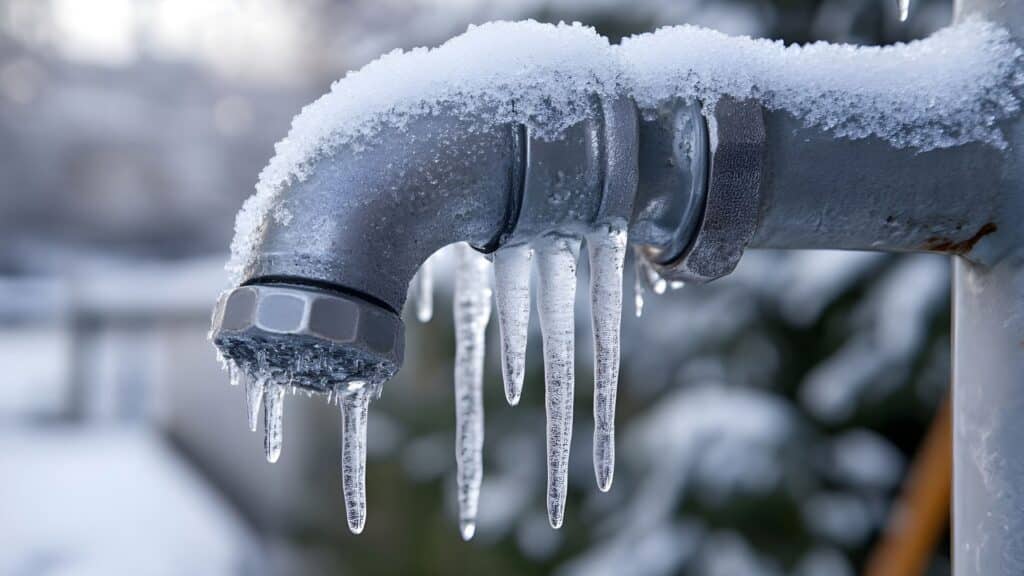
Keep your heat on and steady, open the cabinet doors under sinks on exterior walls, let a faucet drip during hard freezes, and insulate any pipes in cold spaces like the attic, garage, or crawl space. Disconnect and drain outdoor hoses before the first deep freeze. Those few steps stop most frozen pipe problems, and none of them take more than an afternoon.
A frozen pipe isn’t just an inconvenience. When water freezes, it expands, and a cracked pipe can turn into a flooded basement or a soaked ceiling the moment things thaw out. The good news is that prevention is cheap compared to the cleanup. Here’s what we’d do before the next cold snap.
1. Find the Pipes Most at Risk
Not every pipe freezes with the same likelihood. The ones to worry about are pipes in unheated or poorly insulated spots:
- Attics, crawl spaces, and unfinished basements
- Garages, especially if they’re not heated
- Pipes running along exterior walls
- Outdoor spigots and hose bibs
- Plumbing under kitchen and bathroom sinks on exterior walls
Take a quick walk through your house and make a mental map. If a pipe is close to an outside wall or a cold space, it goes on the watch list.
2. Insulate Exposed Pipes
Pipe insulation is one of the cheapest upgrades around. Foam sleeves slip over pipes in minutes, and most hardware stores carry them. The U.S. Department of Energy notes that in cold climates, pipes in vented crawl spaces should be insulated to keep the water in them from freezing, and that heat tape can help where insulation alone isn’t enough.
While you’re at it, look at the insulation in the spaces around your plumbing. The American Red Cross points out that insulating attics, basements, and crawl spaces keeps those areas warmer, which helps protect the pipes inside.
3. Disconnect and Drain Outdoor Hoses
This is the step people forget, and it’s the easiest. Before a hard freeze:
- Disconnect and drain every garden hose, then store it
- Close the inside shutoff valve that feeds the outdoor hose bib
- Open the outside spigot so any leftover water can drain out
- Leave the outside valve open so remaining water has room to expand
That last point comes straight from the Red Cross: keeping the outside valve open lets any water left in the pipe expand without breaking it. If you have a sprinkler system, drain those lines too. Skip the antifreeze unless the manufacturer or installer says to use it.
4. Keep the Heat On and Steady
It’s tempting to drop the thermostat at night to save money, but a colder house means colder pipes. The Red Cross recommends keeping the thermostat set to the same temperature day and night. You may see a slightly higher heating bill, but that beats a plumbing repair.
Heading out of town? Don’t turn the heat off. Our guide on how to shut off your home water in an emergency suggests leaving the heat set to at least 55 degrees if you travel in winter, and considering shutting off the main valve and draining the lines before you leave.
5. Open Cabinet Doors
Pipes under sinks live in a closed box, and that box can get cold when the sink is on an exterior wall. The Red Cross suggests opening kitchen and bathroom cabinet doors so warmer air can circulate around the plumbing. If you have kids or pets, move cleaners and chemicals out of reach first.
6. Let a Faucet Drip During a Hard Freeze
When the forecast gets truly brutal, let the cold water drip from a faucet served by exposed pipes. Moving water is harder to freeze, and a small drip also helps relieve pressure in the line. You don’t need a stream, just a steady drip. Pick the faucet that’s farthest from where the water enters your home if you can, since that gets water moving through more of the system.
7. Seal Drafts Near Pipes
Cold air sneaking in around pipes can freeze them even when the rest of the house is warm. Look for gaps where pipes pass through exterior walls, around dryer vents, and near cable or phone lines. Seal them with caulk or spray foam. Our post on 4 tips to save on heating bills this winter covers more ways to tighten up your home, which also helps your pipes.
What If a Pipe Freezes Anyway?
First sign to watch for: you turn on a faucet and only a trickle comes out. The Red Cross says that if you get a trickle, suspect a frozen pipe. Here’s what to do:
- Keep the faucet open, so melting ice has somewhere to go
- Apply gentle heat to the pipe, such as a hair dryer or a heating pad, until full water pressure returns
- Never use a blowtorch, kerosene or propane heater, charcoal stove, or other open flame
- If you can’t thaw it, or you can see a crack, shut off the main valve and call a licensed plumber
Once the pipe thaws, check it for leaks. If water is already coming through, head to the main shutoff right away.
Frequently Asked Questions
At what temperature do pipes freeze?
Water freezes at 32 degrees Fahrenheit, but pipes don’t freeze the instant the air hits that number. Pipes in unheated spaces or on exterior walls are the first to go, especially when the cold lasts for hours or the wind is strong.
Should I leave my faucets dripping all night?
During a hard freeze, yes, a slow drip on a faucet served by exposed pipes is a good idea. If the forecast stays above freezing, you don’t need to.
Is it okay to turn my heat down while I’m away?
You can lower it, but don’t turn it off. We suggest at least 55 degrees if you’re traveling in winter. Some homeowners also shut off the main water and drain the lines for longer trips.
What should I do if my pipes freeze and burst?
Shut off the main water valve right away, open faucets to relieve pressure, turn off electricity in any wet area if it’s safe to do so, and call a licensed plumber. Then call your insurance company.
Can I use a hair dryer to thaw a frozen pipe?
Yes, a hair dryer is a safer choice than an open flame. Keep the faucet open and apply heat slowly until the water pressure comes back. Stay away from anything with a flame.
Do pipes inside my walls freeze too?
They can, especially pipes along exterior walls with thin insulation. If you’ve had trouble before, a plumber or insulation contractor can check wall cavities and suggest fixes.