
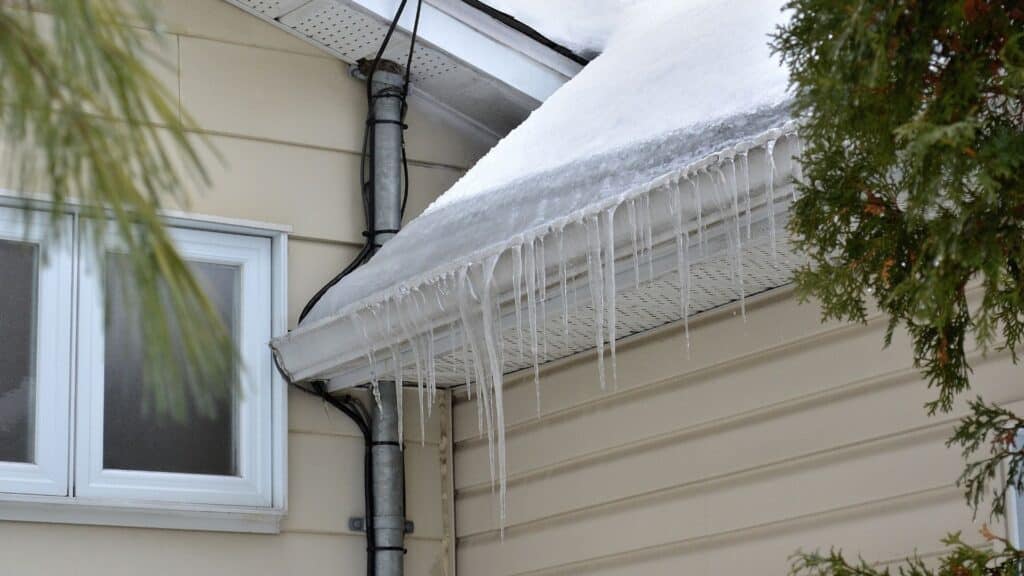
Ice dams happen when heat escapes from your house into the attic, warms the roof, and melts the snow on top. That water runs down, refreezes at the cold edge of the roof, and builds a ridge of ice that traps more melting water behind it. The long term fix is to seal air leaks in the attic floor, add insulation, and make sure the attic is properly ventilated so the roof stays cold. Short term, you can clear snow off the roof edge with a roof rake.
Ice dams are a big deal in Michigan and anywhere that gets snow followed by freeze thaw cycles. They can lead to leaks, damaged ceilings, soaked insulation, and even mold. Here’s what’s going on and six ways to stop them.
How Ice Dams Form
The University of Minnesota Extension describes an ice dam as a ridge of ice that forms at the edge of a roof and prevents melting snow from draining off the roof. The water that backs up behind the dam can leak into a home and cause damage to walls, ceilings, and insulation.
The cause comes down to uneven roof temperatures. Heat loss from the house, snow cover, and outside temperatures all interact. For an ice dam to form, there has to be snow on the roof while the higher parts of the roof surface are above freezing and the lower parts are below. Michigan State University Extension adds that too little insulation or too little ventilation in the attic is generally the cause, because either one keeps the roof from staying cold enough.
In plain terms: if your attic is warm, your roof is warm, and that’s when snow melts at the top and freezes at the bottom.
1. Seal Air Leaks Into the Attic
This is the step that matters most. Warm, moist air from your living space sneaks into the attic through gaps around recessed lights, attic hatches, plumbing and wiring openings, and chimney chases. The U.S. Department of Energy recommends a good air seal of the ceiling plane, along with adequate attic insulation and ventilation, to reduce heat getting to the roof deck.
The University of Minnesota Extension puts it this way: first, make the ceiling airtight so no warm, moist air can flow from the house into the attic space. Spray foam, caulk, and weatherstripping on the attic hatch do a lot of the work. Not comfortable crawling around up there? This is a good job for an insulation or energy efficiency contractor.
2. Add Attic Insulation
Once the leaks are sealed, think about the insulation itself. The same extension guide suggests increasing ceiling or roof insulation to cut down on heat loss by conduction. Look for thin spots, compressed batts, and bare areas along the edges of the attic where the roof gets low. The Department of Energy notes that when the roof pitch is low at the eaves, insulation may be compressed or absent, which can cause cold spots in the ceiling and ice dams.
3. Check Your Attic Ventilation
A vented attic lets cold outside air move through and keeps the underside of the roof cold. Look for soffit vents at the eaves, which bring air in, and ridge or gable vents, which let it out. Make sure insulation isn’t blocking the soffit vents.
One note on fans: the University of Minnesota says mechanical attic ventilation is not recommended, and natural roof ventilation is what helps maintain even roof temperatures.
4. Fix Leaky Ducts and Vent Exhausts
Heating ducts running through the attic can lose heat and warm the roof. The Department of Energy points out that if you have ducts in a vented attic in a cold climate, leaky heating ducts can cause snow on the roof to melt, leading to ice dams. Also check that your bathroom fans, kitchen hood, and dryer vent exhaust outside and not into the attic.
5. Clear Snow From the Roof Edge
When heavy snow piles up before you’ve fixed the attic, a roof rake can help in the short term. Pull snow down from the lowest few feet of the roof, since that’s where dams build. Stand on the ground, use a long handled rake, and never lean a ladder against icy gutters. The University of Minnesota warns that rakes and brooms can damage roofing materials, so go gently, and for bigger jobs, call a professional.
Don’t chip at the ice with a hammer or ax, since that can damage shingles. If a dam is already causing a leak, a roofing contractor can safely create channels so water can drain. The university’s guide notes that those channels only help temporarily, usually for a few days, so they aren’t a real fix.
6. Know When to Call a Pro
Call someone if you see:
- Water stains or drips on your ceiling or walls after snow
- Large icicles or ice buildup along the whole roof edge
- Damp or compressed attic insulation
- Frost on the underside of the roof deck
- A history of ice dams every winter, which usually points to air leaks or ventilation issues
The university’s guide also says to hold off on interior repairs until ceilings and walls are dry. That means no painting over a water stain until it’s confirmed the moisture is gone.
Frequently Asked Questions
Are icicles a sign of an ice dam?
Not always, but big icicles along the roof edge often mean water is melting and refreezing there. If you also see a thick ridge of ice, or water stains inside, you likely have an ice dam.
Can ice dams damage my roof?
Yes. Water backing up under shingles can leak into the attic, wet the insulation, and stain ceilings and walls. Over time, it can cause rot and mold.
Will heat cables stop ice dams?
They can help in a trouble spot, but they treat the symptom and not the cause. Sealing air leaks and improving insulation and ventilation is the lasting fix.
Is it safe to knock ice off my roof?
We don’t recommend it. Chipping can damage shingles and gutters, and climbing on an icy roof is dangerous. Use a roof rake from the ground, or hire a professional.
Does my homeowners insurance cover ice dam damage?
It depends on your policy. Many cover sudden water damage inside the home, but coverage varies, so check with your insurance company before a problem comes up.
When is the best time to fix ice dam problems?
Before winter, ideally in fall. Attic air sealing and insulation work are easier when it isn’t snowing, and you’ll be ready for the first big storm.
Keep Your Roof and Home Protected
A warm roof is the root of an ice dam, so a tight, well insulated attic is your best defense. For more ways to get your house ready for cold weather, read our guide on what to do around the house before fall arrives and our post on how to save on heating bills this winter.