
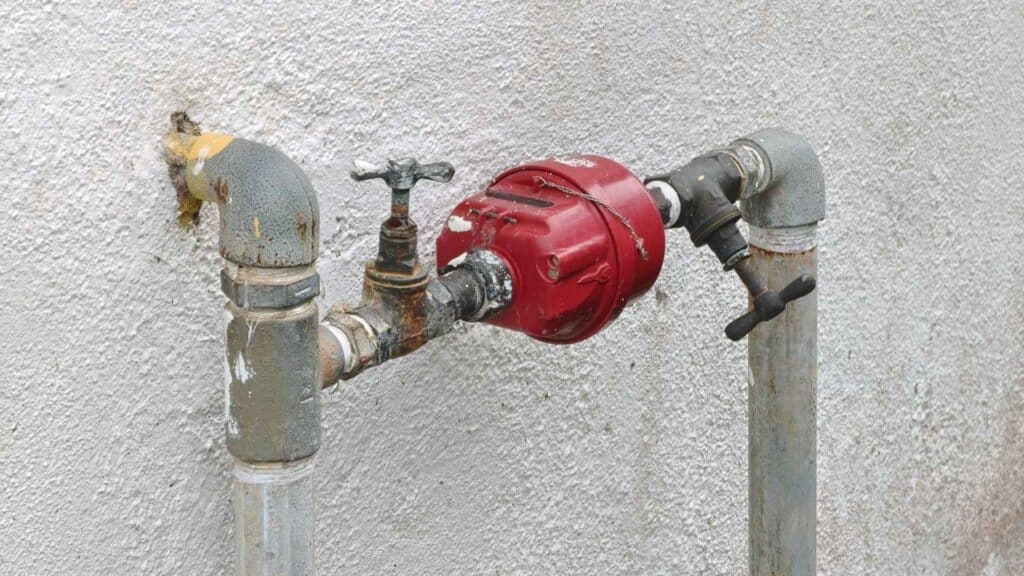
Picture this: you walk into your kitchen on a Tuesday morning, and water is pouring out from under the sink. Or you come home to find the ceiling in your living room sagging and dripping after a pipe burst somewhere upstairs. In moments like these, every second counts, and the single most important thing you can do is stop the flow of water immediately.
Knowing how to shut off your home water supply before an emergency happens is one of the most practical skills any homeowner can have. It costs nothing to learn, takes only a few minutes to prepare, and can save you thousands of dollars in water damage the moment something goes wrong. Yet most homeowners have never located their main shutoff, let alone practiced using it.
This guide walks you through everything you need to know: where to find the shutoff valves in your home, how to use them correctly, and how to make sure your whole household is ready to act fast when the unexpected happens. Water emergencies are stressful enough without having to figure things out on the fly. Being prepared means you take control immediately instead of watching the damage get worse.
Why Knowing This Could Save Your Home
Water damage is one of the most common and most expensive problems homeowners face. According to the Insurance Information Institute, water damage and freezing claims account for nearly 24% of all homeowner insurance claims, with the average claim costing over $11,000. A burst pipe, a failed washing machine hose, or a cracked supply line can release dozens of gallons of water per minute into your home.
The difference between a manageable cleanup and a full-scale renovation often comes down to how quickly the home’s water supply is shut off. A pipe left running for an hour while you search for the valve can saturate flooring, soak through drywall, damage structural framing, and create the conditions for mold that lingers long after the visible water is gone.
Knowing exactly where your shutoffs are and how to operate them turns a potential disaster into a contained incident. That knowledge is one of the most genuinely valuable things you can have as a homeowner, and it takes almost no time to get it.
The Main Shutoff Valve: Your Most Important Tool
Every home has a main shutoff valve that controls the entire home water supply entering the building. When this valve is closed, water stops flowing to every fixture, appliance, and pipe in the house. It is the nuclear option when you do not know exactly where a leak is coming from, or when the leak is severe enough that isolating a single fixture is not enough.
The main shutoff is typically located in one of a few places, depending on your home’s age, style, and region. In colder climates like Michigan, it is most commonly found inside the home near where the water line enters the foundation, often in the basement, crawl space, or utility room. In warmer climates, it may be located outside near the foundation or in a covered box near the street. If you have never located yours, now is the time to find it.
Walk the perimeter of your basement or utility areas and look for a pipe coming through the foundation wall with a valve attached. The valve will either be a gate valve, which looks like a wheel you turn clockwise to close, or a ball valve, which has a lever handle that turns 90 degrees to shut off flow. Both types effectively stop the home water supply, but ball valves are faster to operate and are the modern standard in most homes built in the last 30 years.
Once you find the main shutoff, test it. Turn it off and confirm that water stops flowing at a nearby faucet. Then turn it back on slowly and make sure the flow resumes normally. A valve that has not been operated in years can sometimes be stiff, corroded, or difficult to turn. Discovering that problem now, on a quiet afternoon, is far better than finding it out when water is actively flooding your home.
What to Do If the Main Valve Is Stuck or Broken
If your main shutoff valve is stuck and will not turn, do not force it to the point of breaking. Apply a penetrating lubricant like WD-40 to the stem and wait a few minutes before trying again. For gate valves, use a wrench for additional leverage, but turn slowly and steadily. If the valve is visibly corroded, cracked, or simply will not move, add replacing it to your immediate maintenance list and call a licensed plumber.
If the main shutoff inside your home fails during an emergency, your next option is the street-side shutoff, also called the curb stop. This valve is located in a covered box near the street or sidewalk and controls the water coming into your property from the municipal supply line. It typically requires a special tool called a curb key or a water meter key to operate, which you can purchase at any hardware store for a few dollars and should keep with your emergency supplies.
In some municipalities, shutting off the curb stop valve is technically the utility company’s responsibility. In a true emergency, however, stopping the flow to your home water supply takes priority, and most utilities understand that. Keep your local water utility number posted somewhere accessible so you can notify them once the immediate crisis is handled.
Individual Fixture Shutoffs: Stopping the Source Directly
Not every plumbing emergency requires shutting off the entire home water supply. In many cases, the problem is isolated to a single fixture or appliance, and knowing how to shut off just that supply line can resolve the situation without disrupting water service to the rest of your home. Every toilet, sink, dishwasher, washing machine, and water heater should have its own dedicated shutoff valve, and you should know exactly where each one is before you ever need it.
Toilet shutoffs are the simplest to locate. Look for the valve on the wall or floor directly behind the toilet where a small supply line connects to the tank. Turn it clockwise to close. Sink shutoffs are under the cabinet on the supply lines running up to the faucet connections. Turn both clockwise to cut off the flow to that fixture entirely.
The washing machine shut-off is often overlooked but critically important. Washing machine hoses are one of the leading causes of major water damage in homes, and they can fail suddenly without warning. Behind your machine, you will find hot and cold hose connections going into the wall with a valve for each line. Know where they are, confirm they turn freely, and consider upgrading rubber hoses to braided stainless steel versions, which are far more durable and far less likely to burst.
Your water heater also has a dedicated cold water supply line with its own shutoff valve, typically located where the line enters the top or side of the tank. In the event of a tank leak or failure, closing this valve stops new water from entering while you manage the situation. Knowing the location of every fixture valve in your home is part of understanding how your home water supply system functions as a whole, and that knowledge pays off every time something goes wrong.
How to Make a Home Water Shutoff Plan
Knowing where your shutoffs are is only half the equation. Everyone in your household needs to know too. A water emergency does not always happen when the most prepared person is home. It might be your partner, your teenager, or a houseguest who first notices the leak, and if they do not know where the main valve is, precious time is lost.
Walk through your home with every member of your household and show them the main shutoff valve, the individual fixture shutoffs, and the curb stop location. Have each person practice opening and closing the main valve at least once so the motion is familiar. Label the valve with tape if it is in a cluttered area. The goal is to make the right action instinctive rather than something that requires thought under pressure.
Keep a basic plumbing emergency kit near your main shutoff: a curb key, an adjustable wrench, work gloves, a flashlight, and a few pipe repair clamps. Write down your shutoff locations, your local water utility number, and a trusted plumber’s contact, then post it somewhere visible, like inside a kitchen cabinet. The American Red Cross recommends that every household have a home emergency plan, and water shutoff information should be a core part of that plan. A helpful household emergency planning guide is available at the American Red Cross emergency preparedness page.
Seasonal Considerations: Protecting Your Home Water Supply in Winter
For homeowners in colder climates, winter introduces a serious additional risk for the home water supply. Pipes running through exterior walls, crawl spaces, and uninsulated basements are vulnerable to freezing when temperatures drop sharply. A frozen pipe does not always burst immediately, but the pressure that builds as water expands inside the pipe can cause it to split, and the resulting flood happens the moment the ice thaws.
Pipe insulation sleeves cost just a few dollars at any hardware store and can be installed in minutes. For especially exposed pipes, heat tape adds another layer of protection on the coldest nights. If you plan to travel during winter, leave your heat set to at least 55 degrees and consider shutting off the home water supply at the main valve and draining the lines before you leave.
If you suspect a pipe has already frozen but has not yet burst, act quickly. Open the faucets downstream of the frozen section to relieve pressure, and use a hair dryer or heating pad to gently warm the pipe from the faucet end back toward the wall. Never use an open flame. If you cannot locate the frozen section or the pipe has already burst, shut off the home water supply at the main valve immediately and call a plumber.
After the Emergency: What to Do Next
Once the water is off and the immediate crisis is contained, document any visible damage with photos before you start cleanup. Your insurance company will need that documentation if you file a claim, and having a clear record from the start makes the process significantly smoother. Move furniture, electronics, and valuables out of wet areas as quickly as possible to limit secondary damage.
Begin drying the affected area immediately using fans, dehumidifiers, and open windows. Mold can begin developing within 24 to 48 hours in a wet environment, so speed matters. Once things are dry and repairs are complete, use the experience as a prompt to review your home’s full plumbing situation, replace any aging rubber supply hoses, and confirm that every shutoff valve in the house is clearly labeled and turning freely.
Final Thoughts
Shutting off your home water supply quickly during an emergency is a skill every homeowner deserves to have. It is not complicated, it does not require professional training, and it takes only a few minutes to learn. But it can absolutely be the difference between a minor inconvenience and a catastrophic, expensive loss.
Take the time today to find your main shutoff valve, test it, and walk your household through the plan. You will never regret being prepared, and one day you will be genuinely glad you did not put it off.