
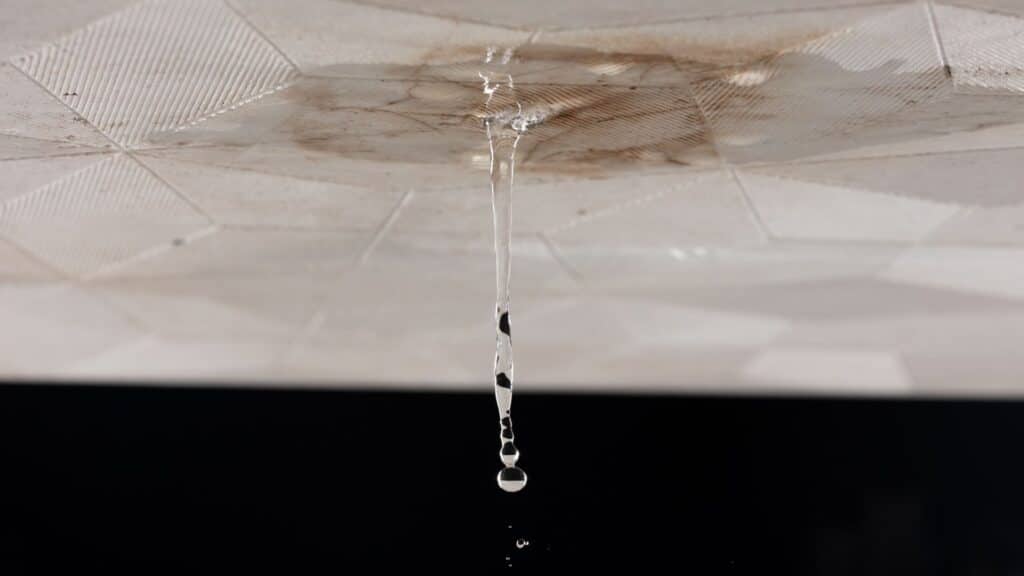
You look up one morning and there it is: a brown, rust-colored ring spreading across your ceiling like an unwanted piece of abstract art. Ceiling water stains have a way of appearing without warning and raising immediate questions about what is happening inside your home and how serious it really is. The temptation to paint over it and move on is understandable, but it is also one of the most common and costly mistakes homeowners make.
Ceiling water stains are never purely cosmetic. Every stain has a source, and that source is still up there doing damage whether the ceiling looks wet right now or not. Understanding what the stain is telling you, finding the cause, and responding in the right order is what separates a minor repair from a major renovation. This guide walks you through every step.
Quick Answer
Ceiling water stains are caused by moisture from a leak, condensation, or structural issue above the stained area, and the source must be identified and repaired before any cosmetic fix is applied. Once the source is resolved and the ceiling is fully dry, the stain can be sealed with a stain-blocking primer and repainted, restoring the ceiling without the damage reappearing.
Why You Should Never Just Paint Over a Water Stain
Painting over ceiling water stains without addressing the source is a fix that lasts exactly as long as it takes for the next leak to bleed through. Standard latex paint does not block water stains. The tannins and minerals deposited by the moisture will bleed through a fresh coat of paint within days or weeks, leaving you with the same stain and a layer of wasted effort on top of it. You have to seal the stain properly, and you cannot do that until the moisture driving it is completely gone.
More importantly, an active leak or chronic moisture source above the ceiling is doing damage you cannot see from below. Wet insulation loses its thermal performance. Wood framing absorbs moisture and becomes vulnerable to rot and mold. Drywall that stays wet softens, loses structural integrity, and can eventually collapse. Ceiling water stains that appear and disappear with rainy weather or that grow over time are telling you something urgent, and covering them up delays a repair that only gets more expensive the longer it waits.
Ceiling Water Stains: Common Causes at a Glance
| Stain Location | Likely Cause | Next Step |
| Below a bathroom | Toilet, supply line, or shower drain leak | Inspect plumbing above; call plumber if needed |
| Below roof line or attic | Roof leak, damaged flashing, or ice dam | Inspect attic and roof; contact roofer |
| Near exterior wall | Flashing failure or siding gap allowing water in | Inspect exterior; contact contractor |
| Near HVAC vent or air handler | Condensate line clog or drain pan overflow | Inspect condensate system; call HVAC tech |
| Spread evenly across large area | Condensation from poor attic ventilation | Inspect attic ventilation and insulation |
| Below kitchen appliances | Refrigerator line, dishwasher, or sink leak | Inspect appliance supply lines and drains |
Step One: Find the Source Before You Do Anything Else
The location of ceiling water stains is your most important clue about what is causing them. A stain directly below a bathroom is almost always a plumbing issue, whether from a toilet supply line, a slow drain leak, a failing wax ring, or a shower pan that has begun to fail. A stain near the roofline or in a room directly below the attic points to a roof or flashing issue. The geography of the stain narrows your search significantly before you call a single contractor.
Start your investigation from above whenever possible. If there is a crawl space, second floor, or attic above the stained area, get up there and look for visible signs of moisture: water trails on framing, wet insulation, discolored wood, or active dripping during or after rainfall. Active leaks are often easier to trace from above than they are from below.
Condensation is a less obvious but common cause of ceiling water stains that homeowners frequently overlook. If your attic lacks adequate ventilation or insulation, warm humid air from the living space rises and condenses on the cold underside of the roof deck, then drips onto ceiling drywall and creates stains that look exactly like a roof leak but are actually a ventilation problem. Air handlers with clogged condensate drain lines can also overflow onto ceiling surfaces below, so check for obstructions near any HVAC equipment above a stained area.
Step Two: Stop the Source and Let Everything Dry Completely
Once you have identified the source of the ceiling water stains, the repair has to happen before anything else. There is no point in drying out the ceiling, applying stain-blocking primer, or touching up paint until the moisture feeding the damage is completely resolved. A ceiling that looks dry on the surface may still have wet framing or saturated drywall behind it that will reactivate the stain or develop mold if sealed in prematurely.
Drying time depends on how long the moisture has been present and how much material was saturated. A minor leak that was caught quickly may fully dry within a few days with good airflow and low humidity. A leak that ran undetected for weeks may require a dehumidifier running continuously for several days, and in some cases the drywall must be cut out and replaced because it simply cannot be dried and restored to a stable condition. Do not rush this step. Sealing wet material is how mold problems begin.
If the ceiling surface has softened, bowed, or shows any sign of structural compromise, replacement is the right call rather than repair. Softened drywall does not accept paint or primer well, will not hold texture properly, and may harbor mold spores even after it appears dry. Cutting out the damaged section and installing new drywall gives you a clean, stable surface to work with and eliminates the risk of concealed mold that could affect indoor air quality for years after the visible stain is gone.
Step Three: Check for Mold Before You Close Anything Up
Ceiling water stains that have been present for more than a day or two in a warm environment may have already set the stage for mold growth. Mold can begin colonizing wet drywall, insulation, and wood framing within 24 to 48 hours under the right conditions, and it is not always visible from the surface. If you notice a musty odor near the stained area, see any discoloration that looks fuzzy or dark green or black, or if the stain has been present and unaddressed for an extended period, treat the area as potentially contaminated before you close up the ceiling.
Small areas of surface mold on drywall, generally less than ten square feet, can often be addressed by a prepared homeowner using appropriate protective gear and a mold-inhibiting solution. Larger areas, mold that has penetrated into framing or insulation, or any situation where the stain is near your HVAC system and potentially circulating spores through the home, should be evaluated by a professional remediation contractor before repairs proceed. Closing contaminated material back into the ceiling amplifies the problem rather than solving it.
Step Four: Seal the Stain and Repaint Correctly
Once the source is fixed, the ceiling is confirmed dry, and any mold concerns have been addressed, you can tackle the cosmetic repair. Standard ceiling paint will not cover ceiling water stains on its own. You need a dedicated stain-blocking primer, either an oil-based shellac primer or a high-quality water-based stain-blocking product, applied over the stained area before any finish paint goes on. These primers seal the tannins and minerals in the stain so they cannot bleed through the topcoat.
Apply the stain-blocking primer to the entire affected area and extend it a few inches beyond the visible edges of the stain. Let it dry completely according to the manufacturer’s instructions before applying your finish coat. One coat of stain blocker is usually sufficient for most ceiling water stains, but particularly heavy or deep-set stains may benefit from two coats before the topcoat goes on. Using the right primer at this stage is what makes the repair permanent rather than temporary.
For the finish coat, use ceiling paint that matches your existing ceiling as closely as possible. If the ceiling has not been painted in some time, repainting the entire surface avoids a visible patch that does not quite match. A fresh coat across the whole ceiling is a small extra step that makes the repair invisible and gives you a result that looks professionally done rather than patched.
When to Call a Professional
Not every ceiling water stain is a DIY situation. If you cannot identify the source of the moisture, if the stain continues to grow or reappear after repairs, or if there is any indication of structural damage, mold, or a roofing issue, professional evaluation is the right move. Guessing at the source and doing repair work before the actual cause is confirmed can result in hidden damage that continues to develop while the surface looks fine.
Roof leaks in particular can be deceptively difficult to trace. Water enters at one point on the roof and travels along framing or sheathing before it finds a low point to drip from, which means the ceiling stain can be several feet away from the actual entry point. A qualified roofing contractor or building inspector can identify the true source in a way that a visual inspection from inside the attic often cannot. For structural repairs, moisture assessments, and situations where the damage is extensive, the team at ION Construction provides professional evaluation and repair services for homeowners dealing with water intrusion and structural damage.
Final Thoughts
Ceiling water stains are one of those home problems that reward fast action and punish delay. The stain is not the problem; it is the evidence of one, and that problem is still running its course every hour it goes unaddressed. Finding the source, stopping it, drying the area completely, and making the repair in the right order turns what looks like a serious issue into a manageable one. Every homeowner encounters ceiling water stains at some point, and the ones who come out of it with minimal damage are the ones who took the time to understand what the ceiling was actually telling them.
Need more guidance on tackling water damage and other common home repair challenges? Contact the Home Owners Guide team for free resources, step-by-step tutorials, and practical advice designed to help homeowners handle problems the right way the first time.
Frequently Asked Questions
Are ceiling water stains dangerous?
Ceiling water stains themselves are not immediately dangerous, but the moisture source behind them often is. An active leak that goes unrepaired can saturate structural framing, promote mold growth, and eventually compromise the integrity of the ceiling itself to the point of partial collapse. Mold that develops in wet ceiling cavities can circulate spores through the home via the HVAC system, creating an indoor air quality problem that affects everyone in the household.
How do I know if my ceiling water stain is old or active?
An old stain that is no longer active will feel dry and firm to the touch, will not change in size over time, and will have consistent coloring throughout. An active or recently active stain may feel soft or spongy when pressed, may appear darker at the edges or center, or may visibly grow between observations. If the stain appears, disappears, and reappears with weather patterns or after using plumbing above, it is active and the source has not been fixed.
What kind of primer do I need to cover ceiling water stains?
You need a dedicated stain-blocking primer, not standard latex primer or ceiling paint. Oil-based shellac primer is the most effective option for heavy or stubborn ceiling water stains and will prevent bleed-through even on deep-set discoloration. Water-based stain-blocking primers are a good alternative for lighter stains and offer easier cleanup. Applying finish paint without a proper stain-blocking primer first will result in the stain bleeding through the new paint within days or weeks.
Can ceiling water stains come back after I paint over them?
Yes, ceiling water stains will return if the source of moisture has not been fully resolved or if the stain was not sealed with a proper stain-blocking primer before painting. Standard paint does not chemically block the tannins and minerals left behind by the water, so they continue to migrate through the paint film over time. The only way to prevent recurrence is to fix the moisture source, let the ceiling dry completely, and apply a stain-blocking primer before the finish coat.
How long does it take for a ceiling to dry after a leak?
A ceiling affected by a minor, short-duration leak may dry within two to five days with adequate airflow and a dehumidifier running in the space. A ceiling that has been wet for an extended period, or one that had significant water exposure, can take one to two weeks or more to fully dry, and the framing and insulation above it may take even longer than the drywall surface. Using a moisture meter to confirm dryness below 12 to 15 percent before making repairs is the most reliable way to avoid sealing in residual moisture.
Should I cut out the drywall or can I just repair over the stain?
If the drywall has softened, bowed, crumbled, or shows any visible mold growth, cutting it out and replacing it is the right call. Damaged drywall does not hold primer or paint properly, will not match the surrounding texture well, and may harbor mold even after it appears dry on the surface. If the drywall is still firm and structurally sound after the leak has been repaired and the area has dried completely, surface repair and stain-blocking primer are sufficient for most ceiling water stains.
Home Owners Guide proudly serves homeowners across Michigan with free tips, video tutorials, and practical home maintenance resources. Questions about ceiling water stains or any other home repair topic? Contact our team today.